
Colon Cancer Demands Action: COLOVAC Could Be the Answer


Colon cancer is the second leading cause of cancer death in the United States, with diagnoses rising among adults under 55. In response, the Cancer Vaccine Institute (CVI) at UW Medicine is developing COLOVAC, a first-in-class vaccine designed to intercept colon cancer at its earliest stages, offering hope to those at the highest risk.
Rising Colon Cancer Risk
Colon cancer remains one of the most consequential cancers of our time. National data reveal more advanced disease at detection, and growing disparities that hit hardest in communities without adequate access to prevention and early detection. These trends underscore a need for new strategies to stop cancer before it starts.
Certain populations face an even higher risk. Individuals with inherited syndromes, such as Familial Adenomatous Polyposis (FAP) or Lynch Syndrome, often develop colon cancer at younger ages and face an elevated lifetime risk of developing colon cancer, despite intensive monitoring. High-risk groups, including those with genetic mutations or precancerous polyps identified on colonoscopy, represent both an unmet need and unique opportunity: populations where a preventative or interception (catching cancer before it starts) vaccine could fundamentally change the course of a life.
The COLOVAC Vaccine Could Be the Answer
The CVI team has already developed groundbreaking vaccines into Phase II clinical trials for breast, ovarian, and lung cancers, with early studies demonstrating safety and strong immune responses. Building on this expertise, COLOVAC is designed to intercept colon cancer before it starts and has already proven to reduce the number of intestinal and colon polyps in mouse models. The first human clinical trial is expected to begin within the next three years.
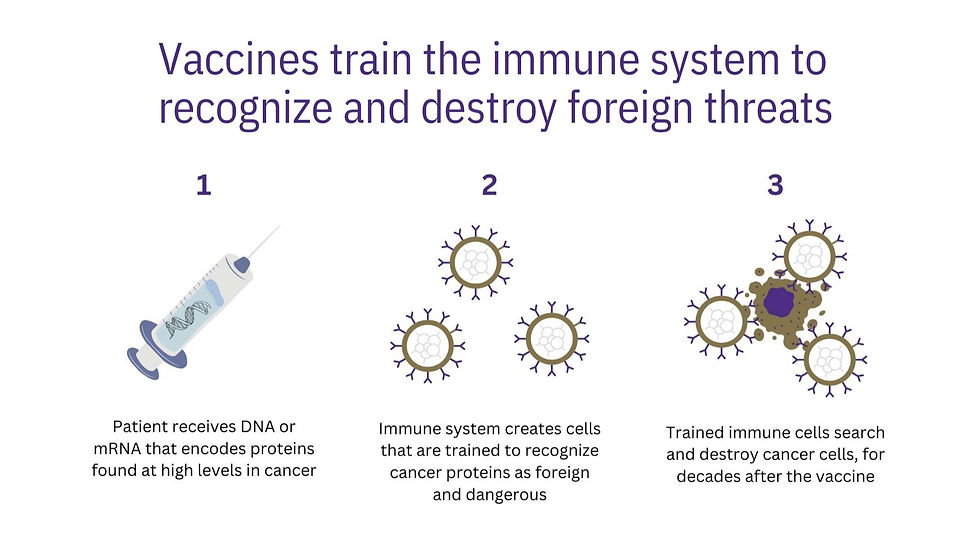
COLOVAC works similarly to an infection disease vaccine: it trains the immune system to recognize colon cancer cells as dangerous and destroy them while leaving healthy cells untouched. This DNA-based vaccine encodes proteins expressed at high levels in precancerous polyps and in colon cancers, which drive tumor growth and metastasis. Vaccination generates immune cells that travel throughout the body, identify cancer cells, and eliminate them. This immunity can last for decades, providing the patient with long-term defense against colon cancer.
COLOVAC Development Progress
The CVI has already completed the foundational scientific research needed to build a first-in-class colon cancer prevention vaccine. CVI scientists analyzed large datasets from thousands of patients to identify which proteins are present at high levels in precancerous polyps and colon cancer. They then used a set of algorithms to pinpoint the exact protein fragments most likely to activate the immune system. Each fragment was tested as peptides individually and in combination with mouse models to determine which generated the strongest immune responses. With this data, the team is now encoding the selected fragments into a DNA vaccine and optimizing the order and spacing for each component.
Next Steps for COLOVAC
From here, the next steps for COLOVAC are:
Formulating the final DNA vaccine
Testing its ability to slow or prevent tumor growth in efficacy studies in two colon cancer mouse models
Ensuring that the vaccine is safe by conducting FDA-required toxicity studies
Manufacturing the vaccine
Compiling the full scientific, safety, and manufacturing information for the Investigational New Drug (IND) application to the FDA.
After CVI receives approval for the IND from the FDA, a Phase I clinical trial can begin, targeting individuals with FAP, high-risk polyps identified on colonoscopy, and patients who have been treated to remission after colon cancer diagnosis.
A Bold Vision
COLOVAC represents a bold vision and a revolutionary step in colon cancer prevention. By stopping cancer before it starts, it offers hope for high-risk populations and a potential to dramatically reduce the burden of this deadly disease.


