
Driving the Future of Cancer Vaccines: Key Research Milestones from 2025

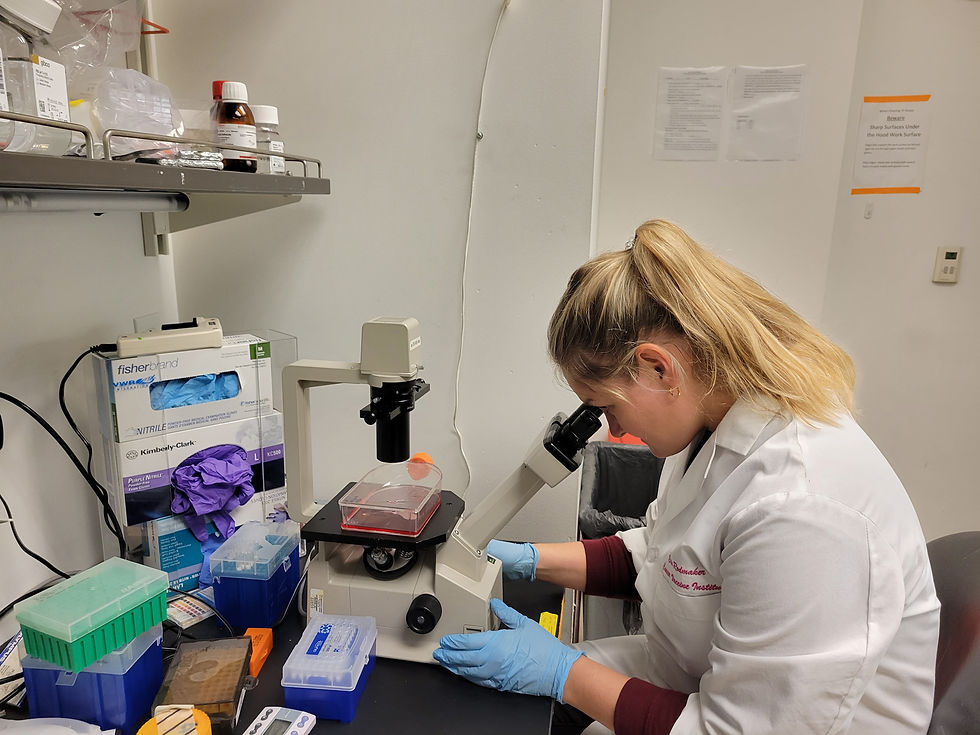
The Cancer Vaccine Institute (CVI) at UW Medicine is advancing a new generation of cancer vaccines designed to train the immune system to recognize and eliminate cancer cells. These vaccines target proteins that are overexpressed in cancer, drive tumor growth, and are linked to poor outcomes. Once activated, vaccine‑generated immune cells circulate throughout the body, seek out cancer cells, and can remain for years, providing long‑term protection.
CVI is developing vaccines for several of the most common and deadly cancers, including breast, ovarian, lung, colon, prostate, and bladder cancers. Vaccines for breast, ovarian, and lung cancer are currently in clinical trials, while vaccines for colon, prostate, and bladder cancer are in preclinical development.
Early Phase I studies in breast and ovarian cancer have shown that CVI vaccines are safe and capable of generating strong immune responses. Many Phase II trials are now underway. While early studies focused on preventing recurrence after initial treatment, current trials are testing vaccines both as recurrence‑prevention tools and as active treatments used alongside standard therapies in earlier‑ and later‑stage disease. CVI is also designing its first prevention‑focused studies for individuals at high risk of developing cancer.
How the CVI Develops Cancer Vaccines: From Bench to Bedside
Our vaccine development pathway moves discoveries from the lab into patients through a multistage process. As the figure shows, it begins with identifying the cancer‑driving proteins most likely to trigger a strong immune response. These targets are tested in preclinical models to confirm that a vaccine can safely activate the immune system and slow or prevent tumor growth.
Once a candidate shows promise, our team refines the vaccine design, generally as a DNA vaccine that encodes several cancer‑associated proteins, and evaluates it in the safety studies required for FDA review. The vaccine is then manufactured in clinical grade-facilities. After approval of an Investigational New Drug application, the vaccine is advanced into clinical trials to assess safety, immune activation, and ultimately its ability to improve outcomes for patients. Phase III clinical trials would be carried out with industry partners, while all earlier steps are done in-house at the CVI.
This bench‑to‑bedside pathway ensures that every CVI vaccine is grounded in strong science, rigorously tested, and built to make a meaningful difference for people facing cancer.

2025 Research and Clinical Advancements
Expanding the Breast Cancer Vaccine Pipeline
STEMVAC in Metastatic Breast Cancer
In 2025, CVI launched two Phase II clinical trials evaluating whether STEMVAC can improve disease‑free survival in patients with measurable metastatic breast cancer. STEMVAC targets five proteins found in cancer stem cells, which can drive chemotherapy resistance, metastasis, and recurrence. Our previously published preclinical studies showed that vaccination can enhance the effectiveness of chemotherapy and hormone therapy. Building on this work we are evaluating STEMVAC’s ability to prevent progression of metastatic breast cancer when administered along with chemotherapy or hormone therapy in the following studies:
A Phase II trial is testing STEMVAC in combination with either chemotherapy or hormone therapy to treat metastatic hormone receptor-positive breast cancer. More Info
A Phase II trial is evaluating STEMVAC with chemotherapy in metastatic triple-negative breast cancer, at UW Medicine and Roswell Park Comprehensive Cancer Center. More Info

STEMVAC to Prevent Recurrence in High‑Risk Early‑Stage Breast Cancer
Many patients now receive chemo- or targeted therapies before surgery. The amount of tumor remaining at surgery, or residual tumor burden, helps determine recurrence risk. CVI is launching a Phase II trial for patients with stage I–III high‑risk triple‑negative breast cancer with RCB2 or RCB3 to evaluate whether STEMVAC can reduce the risk of recurrence. This study will begin enrollment April 2026.
WOKVAC in Early‑Stage HER2+ Breast Cancer
Can vaccination during neoadjuvant therapy (treatment before surgery) strengthen anti‑cancer immune responses inside the tumor itself? A Phase II trial is evaluating whether WOKVAC, a vaccine targeting HER2, IGFBP‑2, and IGF‑1R, given alongside anti‑HER2 therapy and chemotherapy in patients with stage I-III HER2+ breast cancer can do just that. Based on encouraging initial results, the study has been expanded from 16 to 25 patients with support from the Cancer Vaccine Coalition. The study is currently open and is expected to complete enrollment in early 2027. More Info
ADVAC: Targeting Obesity‑Driven Inflammation
Can we prevent breast cancer by targeting an underlying risk factor: obesity? We are developing ADVAC, a multi-antigenic vaccine designed to dampen obesity-associated chronic inflammation, which leads to an increased risk of several cancers and metabolic syndrome. Unlike cancer vaccines, ADVAC is intended to generate an anti-inflammatory response by targeting proteins expressed at high levels in inflamed fat tissue. In previous studies, ADVAC prevented the development of breast cancer and reversed diabetes in obese mice. We are now refining the vaccine design and studying how it modulates metabolic processes in fat tissues and the immune environment surrounding those tissues.

Advancing Ovarian Cancer Vaccines
Stopping Recurrence Before It Starts
Ovarian cancer remains challenging because recurrence rates are high even after successful initial treatment. After completing a Phase I trial of the IGFBP‑2 vaccine, CVI is now testing whether vaccination can intercept recurrence at its earliest detectable stage. Rising levels of the CA‑125 blood tumor marker before cancer appears on scans signal early recurrence,
but there are currently no treatments that are effective at stopping the development of recurrence in those patients. CVI is opening a Phase II trial for IGFBP-2 in ovarian cancer patients who have rising CA‑125 but no visible disease on imaging, to evaluate if the vaccine can eliminate microscopic cancer cells and delay or prevent recurrence. (Enrollment to begin March 2026)
OVAC: Overcoming Chemotherapy Resistance in Ovarian Cancer
Our previous research on breast cancer suggests that vaccines targeting multiple cancer proteins are more effective than those that have a single target. We are currently developing OVAC which targets four proteins, including IGFBP-2, that drive chemotherapy resistance and metastasis in ovarian cancer. In our early studies in mice, OVAC prevented the growth of ovarian tumors. We are currently optimizing the vaccine and testing a gene‑gun delivery method that uses gold‑coated DNA particles to generate stronger immune responses than traditional injections.
Preventing Ovarian Cancer at Its Origin
Preventing ovarian cancer before it ever starts may be possible for individuals at high risk. Those with genetic risk or a strong family history often undergo surgery to remove their ovaries and fallopian tubes. While this surgery significantly reduces risk, it does not eliminate it, and decisions are shaped by considerations around future fertility and the effects of surgical menopause.
We are developing a vaccine that trains the immune system to recognize the cells that give rise to ovarian cancer before the disease develops. The vaccine targets proteins found in serous tubal intraepithelial carcinomas (STIC), a precancerous lesion believed to be the origin of most high‑grade serous ovarian cancers. We are currently identifying the most promising targets and will soon test vaccine candidates in mouse models to evaluate their ability to generate an anti‑cancer immune response.

COLOVAC: Colorectal Cancer Prevention and Treatment
COLOVAC targets proteins that are expressed at abnormally high levels in precancerous polyps and colorectal tumors, including those seen in Familial Adenomatous Polyposis - a genetic disorder that causes hundreds of precancerous polyps to form at young ages and progress to colon cancer. In 2025, CVI refined the vaccine by adding new protein targets and tested a peptide‑based version of the vaccine. Work is now underway to optimize a DNA‑based version for safety and efficacy testing in mice before submitting an Investigational New Drug application to the FDA for human clinical trials.
Precision Probiotic for Immune Modulation
We are developing a precision probiotic to reshape the gut microbiome and enhance the effectiveness of cancer vaccines and other therapies. Our earlier research identified a population of immune cells, called BAC‑TA T cells, that recognize proteins on certain gut bacteria that resemble proteins found on cancer cells. These cells appear to protect beneficial gut bacteria from immune attack, but we believe they may also shield cancer cells from being recognized and eliminated by the immune system.
We have shown that BAC‑TA T cells can leave the gut and are found at high levels in the blood and tumors of breast cancer patients. Specific gut bacteria can stimulate the expansion of these cells and strengthen their cancer‑protective effects.
To reduce BAC‑TA T‑cell levels and create an immune environment more favorable for vaccines and other therapies, we are developing a precision probiotic designed to decrease the bacteria that stimulate these cells. In mice, this probiotic lowers BAC‑TA T‑cell levels and slows cancer growth. Studies are now underway to determine optimal timing, duration, and safety in preparation for human trials.

Scientific Leadership
CVI shared data from four studies at the 2025 San Antonio Breast Cancer Symposium, highlighting advances in HER2‑targeted vaccines, neoadjuvant immunotherapy, and long‑term clinical outcomes. More Info


